
RATANAKIRI PROVINCE — Deep in northeastern region of Cambodia, where rolling red-dirt roads cut through cashew plantations and cassava fields, indigenous communities have relied on traditional subsistence farming for generations. But across the remote villages in Veun Sai, Ou Chum, and Lumphat districts of Ratanakiri province, a quiet economic shift is underway.
Local entrepreneurs from the Kreung and Tampuan ethnic groups are proving that when access to formal credit is paired with sound financial discipline, small loans can fundamentally reshape rural livelihoods.
Capitalizing on Land and Trade
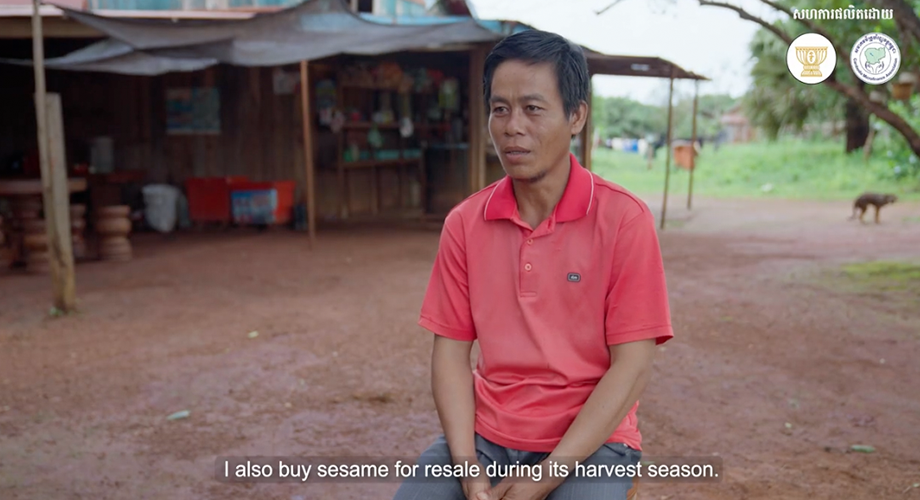
In Khuon village of Veun Sai district, Mr. Mor Thin, a Kreung indigene, spent years constrained by a lack of capital. Though he held a clear vision for expanding his small grocery store and developing his farmland, limited funds kept his ambitions on hold. His trajectory changed after securing an initial $1,500 loan from a formal financial institution. By managing his repayments diligently, he qualified for subsequent loans of $5,000 and eventually $10,000.
“I used this second loan to invest in my farms and grocery store. Since the farm is quite large, it required more money to operate. A portion of the loan was used to expand my grocery store and to buy cashews and cassava during the harvest season”, said Mor Thin.
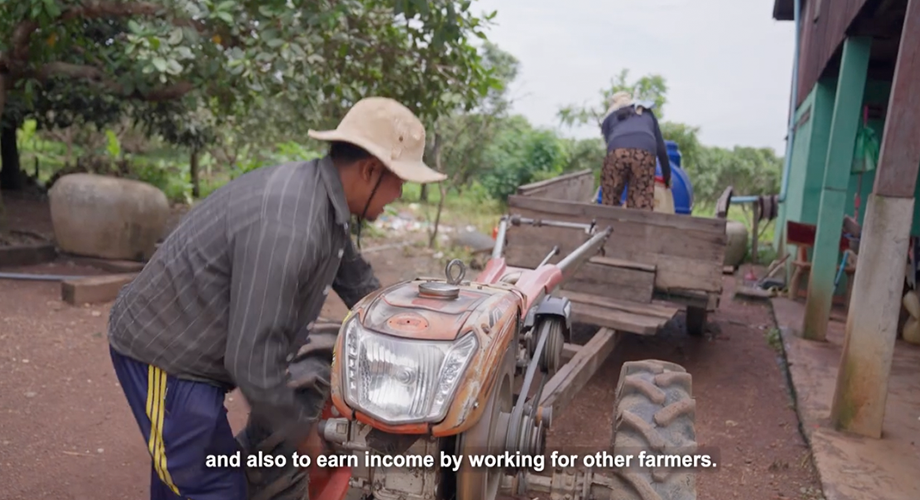
Today, Mor Thin manages a 10-hectare cashew and cassava plantation. Besides seasonally trading cashews and cassava, he also buys sesame for resale. He opereates the expanded grocery business. The increased earnings have translated directly into family security: he purchased farm tools and machines, began constructing a permanent home along the main road, and is funding higher education for his children, including one studying at a university in the capital Phnom Penh.
“I was able to save enough money to start building a house. Although it's not finished yet, I will complete it once I have money from selling my cassava and cashew harvest”, Mor Thin added.
From being an empoloyee to being a business owner
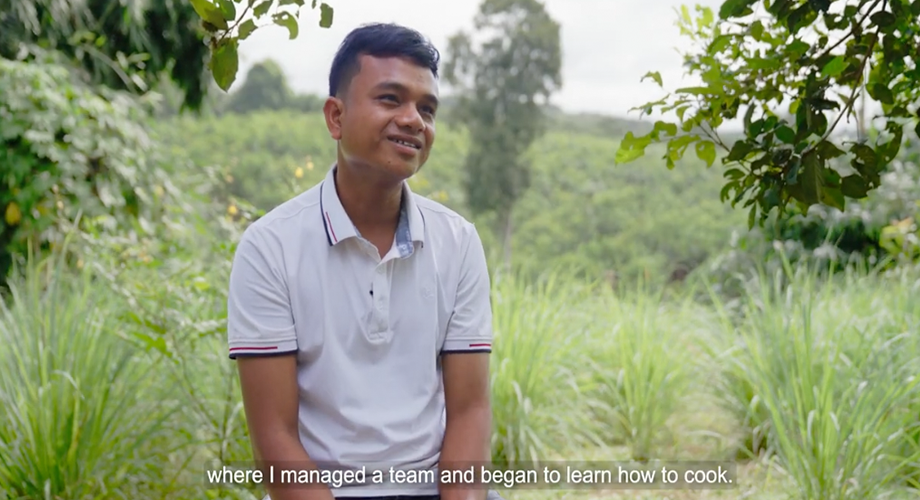
In Ou Chum district, a Tampuan indigenous Mr. Yin Chanthoeun’s journey began in 2016 without capital or technical skills. Starting as a dishwasher for a local catering crew, the Tampuan native learned cooking and management skills on the job until he was promoted to supervisor.
When Chanthoeun needed fund from microfinance institutions to start his own wedding catering service, language could have posed a barrier. Fortunately, the credit officer he worked with was also of Tampuan indigenous, allowing him to fully understand interest structures, loan terms, and repayment schedules in his native tongue.
“When I took out the loan, the process was very convenient because the credit officer, who is also of Tampuan indigene, helped explain everything to me”, he said. “He explained the loan process to us in Tampuan, as well as in Khmer”.
Beginning with a 6 million Riel (USD 1,500) loan, Chanthoeun progressively expanded his credit access to 36 million Riel (USD 9,000). He now runs a wedding catering business, operates a mobile fresh produce cart starting at 3:00 AM daily, co-manages a food stall with his wife, and farms 4.5 hectares (11.25 Acres) cashew with plan for expand into higher-value rubber farm.
Modernizing the Field
Further south in Lumphat district, Ms. Kham Sietmom, another Tampuan farmer who moved to Ba Tang commune in 2002, remembers living in a small thatch hut with almost no assets. But her life has significant improved after taking loan from a financial institution.
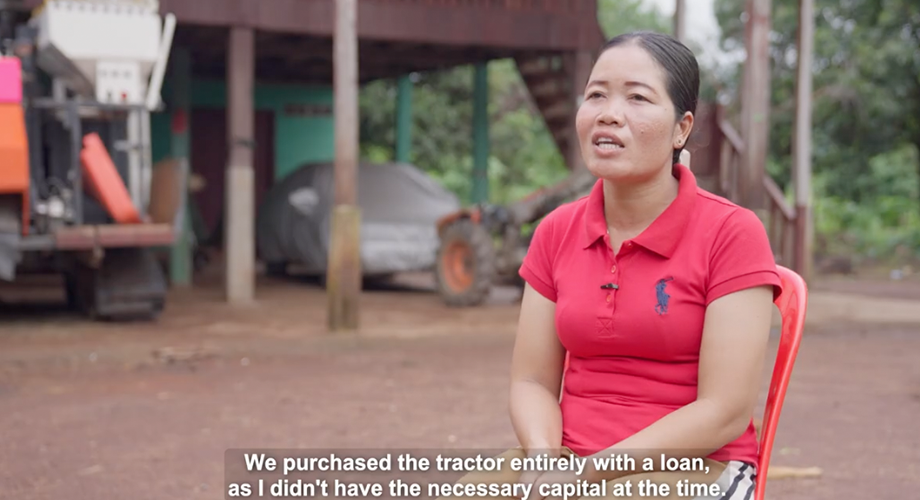
Back then manually plowing from land severely limited her farming and yield, so she used financial services to expand her field and later provide mechanization services. Sietmom started with a USD 1,000 loan to purchase four hectares of farmland. Over time, she reinvested her earnings to acquire a two-wheel tractor, a four-wheel tractor, and recently a combine harvester.
In addition to farming their own land, her husband provides land preparation and harvesting services to neighboring rice and soybean farmers, boosting their family income.
“Since buying the four-wheel tractor, my livelihood has improved. Send my children to school and cover our daily household expenses is much less of hassle,” said Sietmom. “When we have debt, we have to manage our money carefully. We carefully monitor our cash flow, save regularly, and only spend on essentials.”
The experiences of Mor Thin, Yin Chanthoeun, and Kham Sietmom show how responsible access to finance can help indigenous entrepreneurs move beyond subsistence living. With capital, financial discipline, and services that understand local needs, they have expanded farms and businesses, created new sources of income, and improved their families’ lives. Their stories demonstrate that when finance is used wisely and responsibly, it can become a powerful foundation for sustainable livelihoods and long-term rural development in Cambodia.

