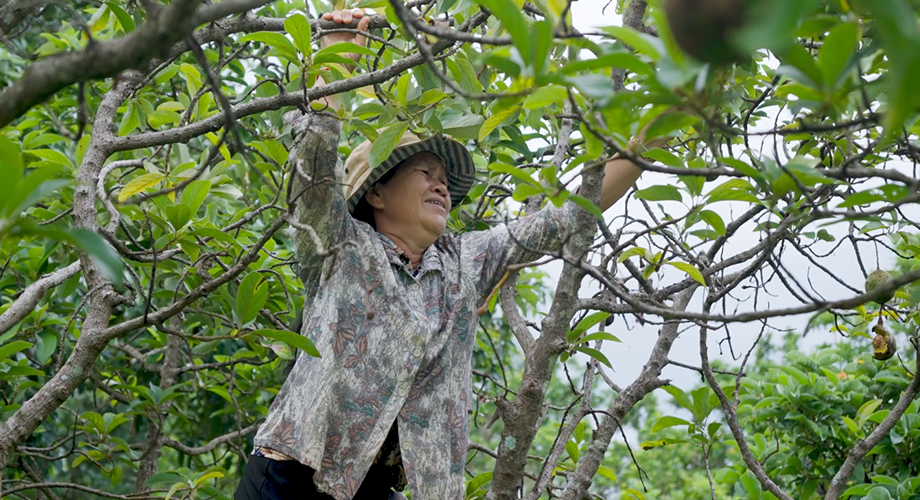
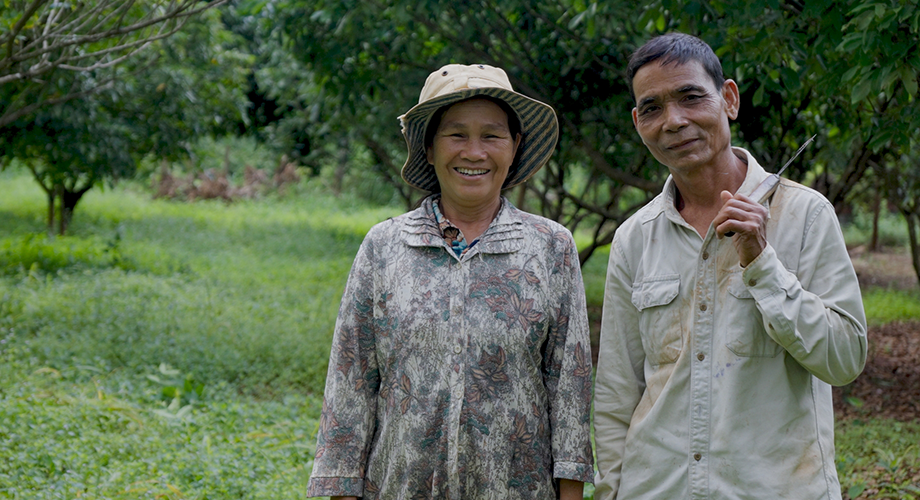
For some Cambodian families, taking on debt can be a source of constant anxiety. But for Mr. Ras Kranh, a Kreung indigenous farmer and now-retired civil servant, strategic borrowing became the turning point that lifted his family from basic subsistence into comfort and stability.
Having living in Cambodia’s north-eastern province of Ratanakiri all his life, Mr. Kranh’s journey began decades ago. He started his career as a civil servant on 1 January 1980, and married his wife six years later. At the time, his government salary was modest, ranging between 60,000 Riels (US$ 15) and 70,000 Riels (US$ 17.50) a month.
To purchase his first plot of land, measuring approximately 0.8 hectares located in Ou Chum District of Ratanakiri Province, he had to sell his cattle and buffalo, initially using the land solely to grow rice. While rice farming provided enough for daily sustenance, it offered no room for financial growth. Relying solely on their government salary made covering daily expenses an ongoing challenge.
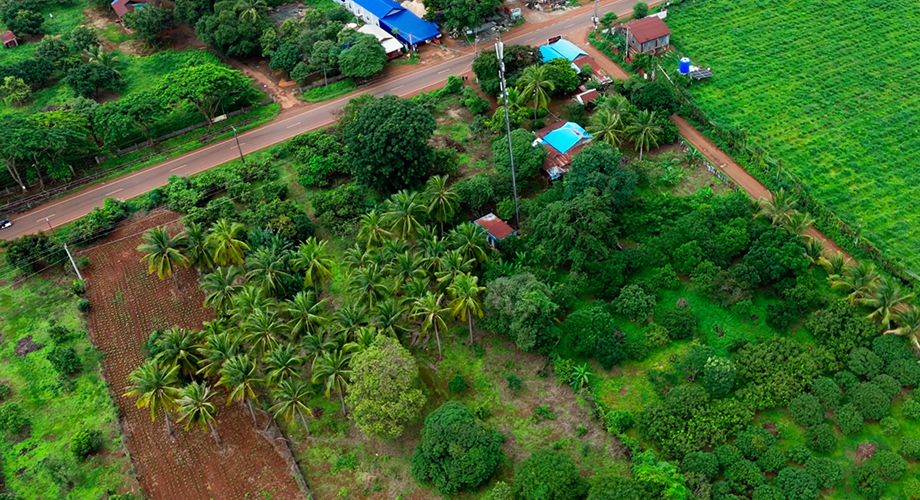
Determined to maximize his land's potential, Mr. Kranh made a bold decision that would change his family’s trajectory. “Afterward, I sought ways to maximize its potential. I borrowed US$ 6,000 from a bank to invest in cultivating coconuts, rambutans, durians, corn, avocados, and other crops”, said Mr. Kranh.
The shift was transformative. The diversified crops began generating an income of 1 to 2 million Riels every one to two months. With these steady earnings, he successfully repaid the bank and turned the land into a productive orchard that far surpassed seasonal rice farming.
Buoyed by this success, Mr. Kranh jumped at the opportunity when a neighbor offered to sell another half-hectare of land adjacent to his second orchard, a location that presently serves as his home in Banlung City, Ratanakiri Province, eventually acquiring even more property to expand his thriving mixed-crop operations.
The impact of that initial US$ 6,000 loan from a financial institution went far beyond agriculture; it reshaped his family’s standard of living. “Without that initial bank loan, life would have been a struggle since our salary alone was insufficient. The US$ 6,000 loan was instrumental in creating an additional, steady stream of agricultural income”, he said, adding “Today, life is much more comfortable. I own a car, a proper home, and enjoy a stable livelihood.”
Observing other local farmers succeeding with rubber and cashew trees, Mr. Kranh decided to expand once more. Taking out a second, larger bank loan of US$ 20,000, he set aside plans to purchase an established rubber plantation and a cashew plantation, living by the philosophy that "every little bit counts" when building for the future.
Reflecting on his financial journey, Mr. Kranh offers pragmatic advice for anyone considering a loan from a financial institution: discipline and purpose are everything. "We learned to budget carefully and spend with a clear purpose," he notes, warning that taking out a loan without a concrete plan for agricultural investment can easily lead to financial ruin. He advises others to avoid extravagant spending and entertainment venues, keeping their focus fixed on productive cultivation.
For Mr. Kranh and his family, the formula was simple yet demanding: when crops thrive through careful planning and hard work, both the borrower and the financial institution succeed together.